.svg)

If you work in an assessor’s office today, you don’t need a report to tell you the workload is growing. You’re living it.
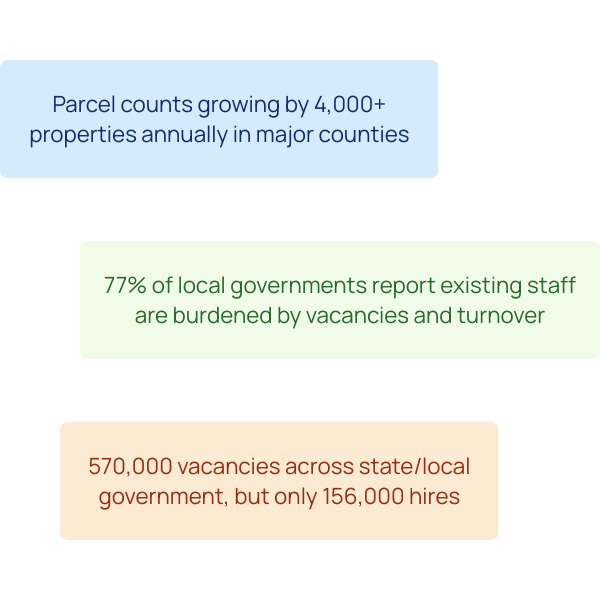
Every year, counties see more parcels, more exemptions, more appeals, more inquiries, and more expectations from taxpayers who want answers faster than ever. At the same time, offices are navigating retirements, vacancies, and the simple reality that hiring isn’t keeping pace with demand.
It’s a lot. And you’re not imagining it — the national data backs it up.
But there’s another shift happening in parallel, and it’s opening the door for something many offices have never had access to before: meaningful automation that actually understands your world.
We’re officially past the hype cycle. AI is starting to make very real impacts in local government, especially for teams buried in routine work.
And here’s the truth: the future of the front desk isn’t about replacing people.
It’s about giving assessors the time and space to do the work that truly requires judgment, empathy, and expertise.
A lot of assessors hear “AI” and assume it means loss of control or replacement of employees. That fear is understandable — and sometimes reinforced by vendors who oversell what their tools can do.
But here’s what I want every assessor to know:
AI is good at:
AI is not good at:
A healthy, responsible AI strategy draws a clear line between those two worlds.
The goal isn’t fewer people.
The goal is more time for people to do the work only they can do.
In our experience, AI delivers the most value when it lives inside the office’s existing workflow and answers the questions staff already answer daily.
Examples that work extremely well:
Examples that should stay with staff:
When used correctly, AI becomes the first line of support — not the final decision-maker.

This may be the most compelling reason to adopt AI thoughtfully.
Local governments are about to experience a massive wave of retirements. Many offices have one or two “go-to people” who hold decades of knowledge in their heads.
AI can’t replace them.
But it can help preserve what they know.
When your processes, policies, and workflows are captured in a searchable knowledge base — and when AI uses that knowledge to pre-draft responses or power internal search — you reduce the risk of institutional knowledge walking out the door.
This is already happening in multiple offices we work with.
And what used to take years of shadowing now takes minutes of search.
When we built Front Desk AI, we weren’t trying to create a chatbot. We were trying to solve the core problem we kept seeing:
Assessors need more capacity — not more chaos.
The modern front desk should:
That’s the model forward-thinking offices are adopting now.
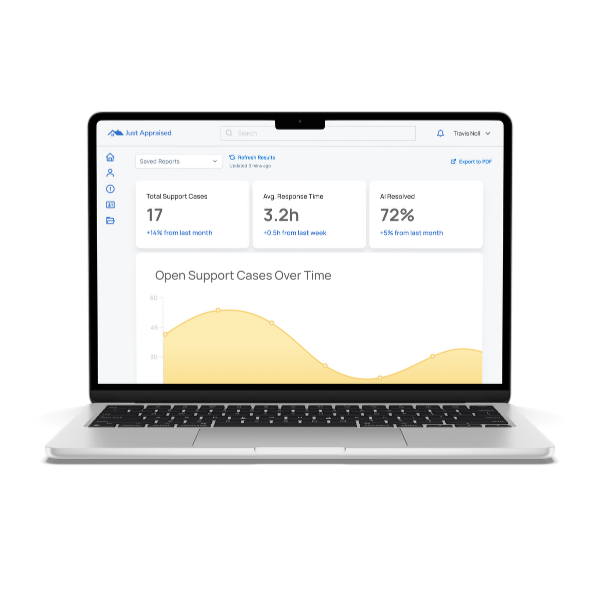
Better responsiveness builds trust.
More consistency builds confidence.
More time for staff leads to better outcomes for taxpayers.
AI isn’t here to change who you are as an assessor — it’s here to give you the capacity to be even better at it.
And if you’re just starting to explore all of this, that’s okay. A lot of offices are right where you are.
What matters most is moving toward tools that respect your expertise, support your team, and actually understand the work you do.
If you want to take the next step — or just talk through ideas — I’m always happy to connect.